Ultimate Guide to Remote Team Management
Remote Team Management, Distributed Workforce, Business Operations Software
The Ultimate Guide to Remote Team Management
Remote team management is no longer just about employees working from home full-time. Today, small and midsize businesses manage people across offices, jobsites, client locations, home offices, and different time zones. The real challenge is building systems that keep people, information, responsibilities, processes, and accountability connected—no matter where work happens.
Remote Team Management Now Means More Than “Work From Home”
For many organizations, remote team management used to mean one thing: employees logging in from home instead of coming to a central office. That definition is now far too narrow. Modern distributed team management covers a wide range of scenarios:
Office staff coordinating with field crews on multiple jobsites or properties
Agencies and professional services teams spread across cities or countries
Contractors and service businesses with technicians constantly on the move
Hybrid teams rotating between offices, home offices, and client locations
In this environment, remote workforce management is not a niche issue; it is how modern business operates. Whether you run a construction firm, a marketing agency, a manufacturing operation, or a growing professional services company, you are already managing remote employees in some form—even if you still maintain physical offices.
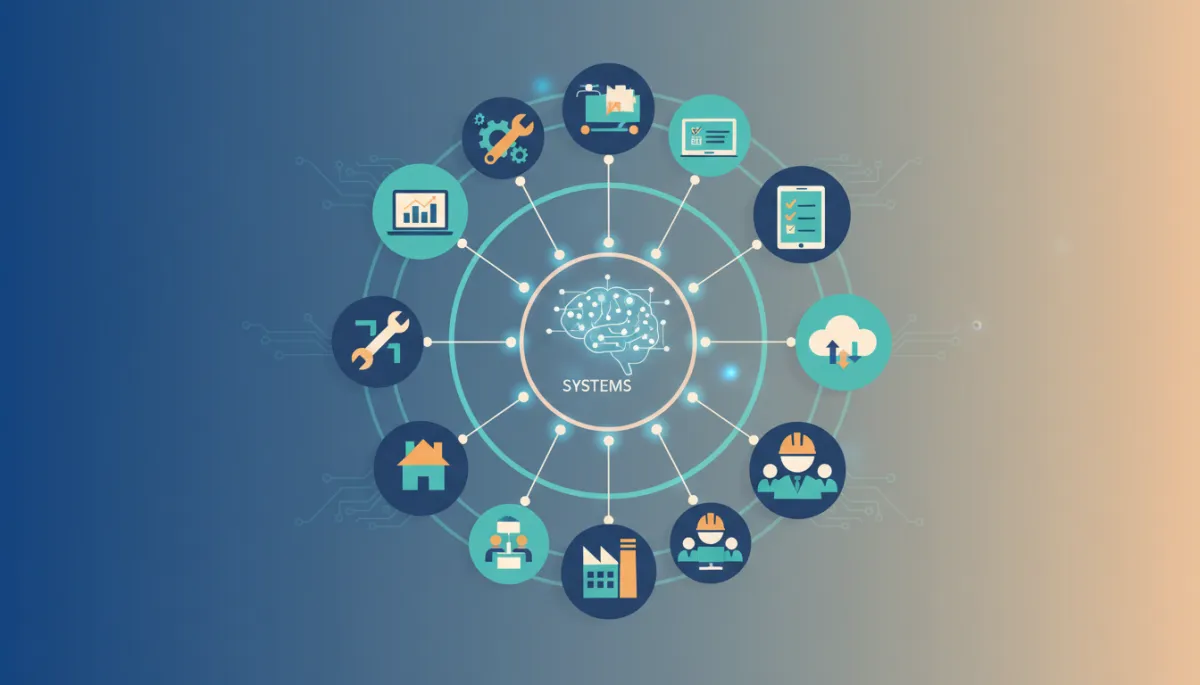
The core problem is not location. It is whether your business has reliable systems to move work, information, and decisions smoothly between people. SYNTRO Software approaches this challenge with a simple belief: better business operation comes from connecting systems, information, processes, and workflows into a single, intelligent whole.
Remote Management Is a Systems Problem, Not Just a Communication Problem
When remote or distributed team management starts to feel chaotic, the first instinct is usually to add more communication channels: more meetings, more email threads, more chat messages, more group texts. Unfortunately, more communication does not automatically mean better management.
In many small and midsize businesses, this leads to the opposite outcome. People are drowning in information but still lack clarity. Leaders spend more time responding to messages, yet work continues to fall through the cracks. The issue is rarely that people are not talking enough; it is that the business lacks clearly defined systems for:
Information management – where key data lives and how it is updated
Work assignment – who gets what, when, and with what instructions
Progress communication – how status is reported and tracked without constant chasing
Documentation – how tasks, jobs, and client work are recorded and stored
Expectations – what “done,” “on time,” and “high quality” actually mean in practice
Effective remote team management starts with designing these systems, then supporting them with the right tools. SYNTRO-OS, the AI-driven operating system from SYNTRO Software, is built around this principle: communication should sit on top of structured processes, not replace them. When your systems are clear, every message has context and purpose.
Establishing a Single Source of Truth for Your Distributed Team
For most organizations, the biggest operational risk in distributed team management is conflicting information. Different versions of job details, outdated spreadsheets, or scattered notes can cause costly errors when team members are not in the same room to quickly clarify details. The solution is to create a single source of truth for your operations.
A single source of truth means there is one authoritative place to find:
Current job or project status, tasks, and next actions
Client details, site information, and contact history
Standard operating procedures (SOPs) and work instructions
Documentation, photos, forms, and approvals tied to each job or account
When everyone—office staff, field teams, contractors, and managers—accesses and updates the same system, you dramatically reduce “he said, she said” confusion. AI-powered platforms like SYNTRO-OS can further enhance this by connecting CRM, operations, accounting, and communications into one intelligent environment, so information does not have to be re-entered or manually synced across tools.
Defining Roles and Responsibilities in a Distributed Environment
Ambiguity around who is responsible for what is amplified when you are managing remote employees. In a physical office, people can quickly lean over and ask, “Is this yours or mine?” Remote and field-based teams do not have that luxury. Clarity must be built into your systems and documentation.
Effective distributed team management requires:
Clear ownership for each process, project, and recurring task
Defined decision rights—who can approve, escalate, or change scope
Documented expectations for response times, quality standards, and handoffs
In a well-designed small business system, roles and responsibilities are not just described in job descriptions; they are embedded in your workflows and SOP software. SYNTRO-OS, for example, allows businesses to assign tasks, approvals, and alerts to specific roles, so accountability is built into the process rather than relying on memory or constant follow-up from the owner.
Documenting Repeatable Processes: From Tribal Knowledge to SOPs
Many businesses still run on “tribal knowledge”—the unwritten know-how that lives in the heads of a few key people. This is risky in any environment, but it is especially fragile when you rely on remote employee productivity. If a supervisor is unavailable or a senior technician leaves, work quality and consistency can drop overnight.
Turning that knowledge into documented, repeatable processes is essential for scalable remote workforce management. Effective business process documentation should:
Break work into clear steps with owners, inputs, and outputs
Include checklists, templates, and examples for common scenarios
Live inside the tools your team already uses, not in a forgotten binder
SYNTRO Smart Capture reflects SYNTRO Software’s philosophy here. Instead of asking busy teams to write long manuals, Smart Capture turns everyday work—forms, photos, notes, and checklists—into structured data that can feed your SOPs, reporting, and automations. Over time, your business builds a living library of how work is actually done, which can be refined into stronger standard operating procedures.

Captured field data feeds directly into standardized processes and real-time reporting.
Creating Better Communication Rules, Not Just More Messages
Communication is still essential, but in remote team management, it must be intentional. Without guidelines, teams end up in constant real-time chat, while important decisions and client details get buried in message history. The goal is to create communication rules that support your systems instead of replacing them.
Practical Communication Rules for Distributed Teams
Consider defining standards such as:
What belongs in your operations or project management system versus chat or email
When to use group channels versus direct messages to avoid information silos
Expected response times for different channels (urgent vs. non-urgent)
When communication supports your core systems—for example, linking a chat thread directly to a job record in your business operations software—you gain context and traceability. SYNTRO-OS is designed to keep conversations, tasks, and data tied together, so decisions and instructions are never disconnected from the work they affect.
Building Visibility Without Micromanagement
One of the most common concerns when managing remote employees is, “How do I know people are actually working?” The wrong answer is to monitor every minute of activity. That approach destroys trust and creates unnecessary friction. Instead, effective remote workforce management focuses on visibility into outcomes and progress, not surveillance of every action.
Outcome-Focused Visibility
To build visibility without micromanagement:
Define clear deliverables and deadlines for roles and projects
Use dashboards to track status, blockers, and throughput at a glance
Automate status updates where possible, so employees do not spend all day reporting
SYNTRO-OS leverages AI to surface real-time operational insights—showing which jobs are on track, which tasks are overdue, and where bottlenecks are forming. Leaders can quickly understand remote employee productivity without demanding constant check-ins or manual reports. This creates a healthier environment where people are trusted to manage their time, while management still has the information needed to steer the business.
Connecting Office and Field Operations
For contractors, service businesses, and construction firms, connecting office and field operations is often the biggest remote management challenge. Office teams handle scheduling, billing, and client communication, while field teams perform the work, gather information, and interact directly with customers. When these two sides operate in separate systems—or on paper—gaps appear quickly.
To close those gaps, your business operations software must:
Give field teams simple, mobile-friendly tools to receive work, capture data, and provide updates
Sync information instantly back to the office for scheduling, invoicing, and reporting
Tie every job or service visit to the same customer, asset, and financial records
SYNTRO Smart Capture helps bridge this gap by turning field interactions—forms, signatures, photos, and notes—into structured, searchable records that immediately update your central system. Combined with SYNTRO-OS, this creates a continuous loop between office and field, enabling more accurate scheduling, faster billing, and clearer accountability across locations.
Creating Effective Remote Onboarding Systems
Hiring remote or distributed employees is only half the battle. Without a strong employee onboarding system, new hires can feel disconnected, confused, and unproductive for far longer than necessary. Effective onboarding is not a single orientation call; it is a structured system that gradually builds confidence, capability, and connection to your culture.
Elements of Strong Remote Onboarding
A robust remote onboarding process typically includes:
A clear 30–60–90 day plan with specific learning and performance milestones
Guided access to SOPs, training materials, and example work in your SOP software
Assigned mentors or “buddies” to answer questions and provide context
When onboarding is embedded in your core systems, new employees learn how work actually flows through your business, not just abstract policies. SYNTRO-OS can support this by automating onboarding tasks, surfacing relevant SOPs based on role, and tracking progress against defined milestones—so managers can quickly spot where additional support is needed.
Avoiding the Technology Trap: More Software ≠ Better Management
A common response to remote management challenges is to add yet another tool: a new chat platform, a different task manager, another time-tracking app. This “technology trap” creates a false sense of progress. In reality, more software does not automatically mean better management. In many cases, it makes things worse by scattering data and fragmenting workflows.
The real question is not, “What tool are we missing?” but, “How well are our existing systems connected?” SYNTRO Software’s philosophy is that an integrated operating system beats a collection of disconnected apps every time. By unifying CRM, operations, accounting, communications, and AI-driven analytics in SYNTRO-OS, businesses reduce complexity while gaining clearer control over their remote and distributed teams.
📌 Key Takeaway: Technology should reinforce your processes, not replace them. Start with clear systems, then choose tools that connect and automate those systems—rather than stacking new apps on top of existing chaos.
Operational Metrics That Matter for Remote Workforce Management
To manage any team effectively—especially a remote or distributed one—you need clear, relevant operational metrics. The goal is not to track everything, but to monitor the few indicators that show whether your systems are working and whether your remote employee productivity is sustainable and healthy.
Core Metrics for Distributed Team Management
Throughput: number of jobs completed, tickets resolved, or deliverables shipped per period, by team and location
Cycle time: how long it takes work to move from request to completion, including remote handoffs
Rework and error rates: how often jobs must be revisited due to incomplete information or missed steps
Utilization: percentage of team capacity spent on billable or value-creating work versus admin and coordination
These metrics help you understand whether your business process documentation, SOPs, and systems are enabling efficient work—or forcing people to fight through friction every day. SYNTRO-OS uses AI to surface these operational insights automatically, so leaders can quickly see where to refine processes, adjust staffing, or improve training across locations.
SYNTRO Software’s Philosophy: Connect Systems, Information, Processes, and Workflows
Underneath all of these practices is a simple idea: remote and distributed team management is an operations challenge, not just a communication challenge. SYNTRO Software was built on the belief that businesses grow faster—and owners regain their time—when systems, information, processes, and workflows are connected into a single intelligent environment.
With SYNTRO-OS, organizations can unify CRM, scheduling, job management, documentation, accounting, and communications on one AI-driven platform. SYNTRO Smart Capture ensures that data from the field and from everyday work is structured, usable, and instantly available across the business. The result is a more consistent, scalable way to manage remote employees, coordinate distributed teams, and maintain visibility across multiple locations—without overwhelming leaders with manual oversight.
Building a Business That Runs Consistently—No Matter Where People Work
Ultimately, successful remote team management is not about recreating the office online. It is about designing a business that operates consistently without requiring everyone to be in the same room—or the owner to personally coordinate every activity. When you:
Establish a single source of truth for work, clients, and documentation
Define roles, responsibilities, and expectations clearly across locations
Document repeatable processes and keep them alive through SOP software and real workflows
Create communication rules that support systems rather than replace them
Build visibility into outcomes and metrics instead of micromanaging activity
—your business becomes more resilient, scalable, and attractive to both clients and employees. Remote and distributed work stops being a liability and becomes a strategic advantage.

SYNTRO Software exists to support that transformation. By providing an AI-powered operating system that unifies your business ecosystem, SYNTRO-OS and SYNTRO Smart Capture help you implement the systems described in this guide—so you can manage remote employees confidently, grow faster, and do it all with less manual effort. If you are ready to turn remote workforce management into a strength rather than a struggle, consider exploring how an integrated, AI-driven platform can support your next stage of growth.
Remote and distributed work is here to stay. The businesses that will thrive are those that treat it as an operations design challenge—one they solve with connected systems, clear processes, and intelligent software—not simply as a communication problem. When you build those foundations, your team can deliver consistent results from anywhere.
Start SYNTRO Smart Capture Free Trial Now


